A Plain Overview of Municipal Government in Ontario
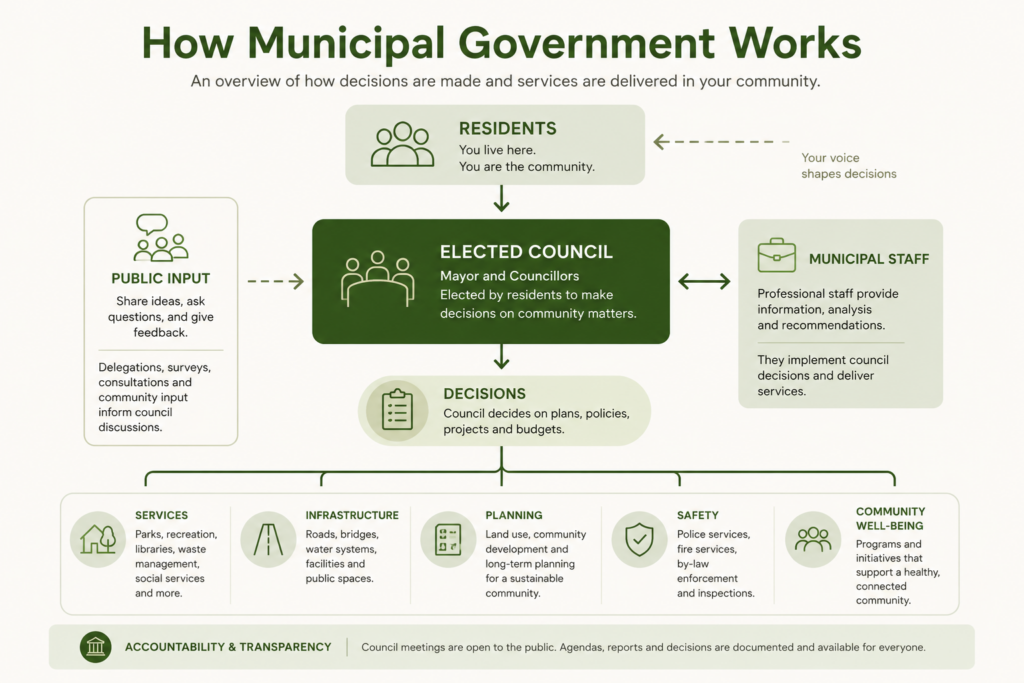
Municipal government is the level of government responsible for local services and local decision-making in Ontario.
This page explains how the system is currently structured and how decisions are made.
For related context, see:
Bill 100 Explained and Participation & Accountability
What Municipal Government Is
Municipal government is responsible for local services and community-level decisions.
This includes areas such as:
- roads and infrastructure
- land use planning
- housing approvals
- water and waste services
- local parks and recreation
- municipal budgets and taxes
Municipal government operates within authority set by the province of Ontario.
Who Makes Local Decisions
Local decisions are made by elected municipal councils.
In Ontario municipalities:
- residents elect mayors and councillors
- councils meet in public to make decisions
- decisions are recorded in agendas and official minutes
- meetings are open for public observation
Councils are the main decision-making body for municipal matters.
How Decisions Move Through the System
Municipal decisions usually follow a structured process:
Proposal → Review → Council Consideration → Decision → Implementation
At different stages:
- municipal staff prepare reports and analysis
- committees may review proposals
- councils debate and vote in public meetings
- approved decisions are implemented by staff
This structure is used across most municipalities in Ontario.
The Role of Municipal Staff
Municipal staff support the decision-making process.
They are responsible for:
- preparing reports and background information
- providing technical and administrative support
- carrying out council decisions
- managing day-to-day municipal operations
Staff do not set elected council priorities, but they support implementation and process.
How Accountability Works
Accountability in municipal government is built into the structure.
It includes:
- regular elections
- public council meetings
- published agendas and minutes
- opportunities for public input
Residents can observe decisions as they are made and review how they are recorded.
How Residents Participate
Residents can engage with municipal government in several ways:
- attending council meetings
- reviewing public agendas and reports
- contacting elected representatives
- participating in consultations or public input processes
- voting in municipal elections
Participation occurs at multiple points in the decision process.
Why Structure Matters
The structure of municipal government shapes how the system functions.
It affects:
- how decisions are made
- how responsibilities are assigned
- how information moves through the system
- how residents interact with decision-making
Structure determines how the system operates over time.
Related Information
This page is part of a broader set of resources on municipal governance.
- Bill 100 Explained
A structural overview of proposed changes to municipal decision-making systems. - Participation & Accountability
How residents engage with municipal government and how input is incorporated.