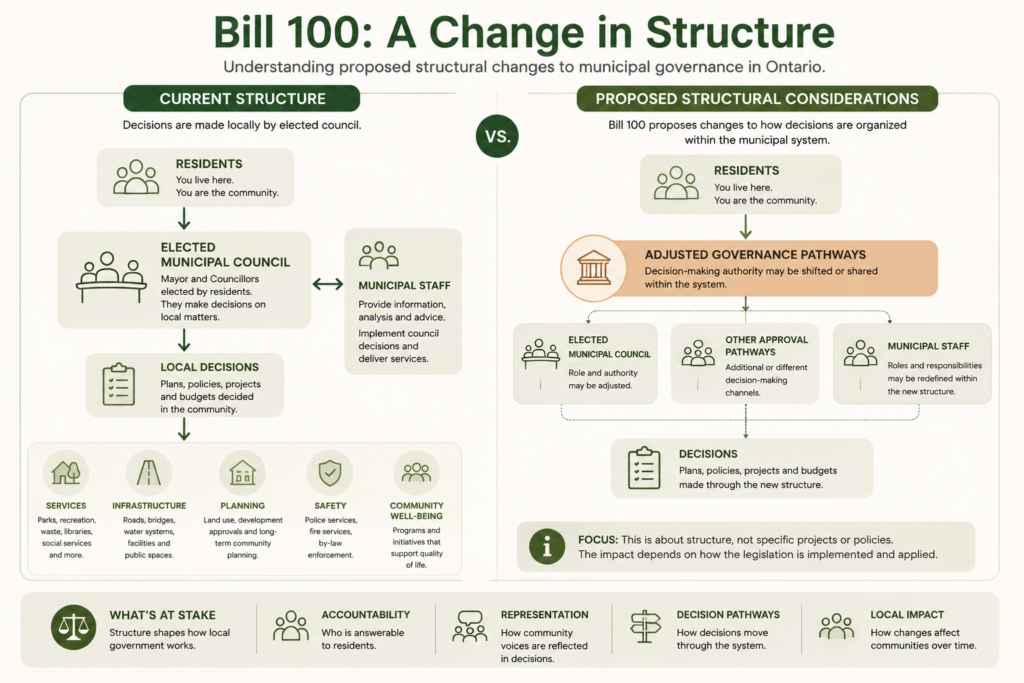
A Structural Overview of Proposed Changes to Municipal Governance in Ontario
Bill 100 relates to how municipal decision-making is structured in Ontario.
This page explains what the bill addresses in simple terms and how it relates to the way local government is organized.
For background on how municipal government currently works, see:
How Local Government Works
What Bill 100 Is About
Bill 100 focuses on the structure of municipal governance.
It relates to how decisions are organized within the system, including:
- how authority is assigned within municipal government
- how responsibilities are distributed
- how decisions move through formal processes
- how governance roles are defined within the system
It is about structure, not individual municipal projects or policies.
Where This Fits in Ontario Governance
In Ontario, municipal governance structure isn’t static. Over time, the province has made adjustments to how certain responsibilities and roles are organized within local government systems.
For example:
- Conservation authority governance changes have adjusted how oversight and appointment structures are defined for watershed management bodies
- Upper-tier municipal governance reforms have included changes in how certain regional leadership roles are selected or structured
- Municipal planning authority amendments have altered approval pathways for specific categories of planning decisions in some jurisdictions
These examples relate to how authority is organized within government systems, not to individual local projects or outcomes.
How Municipal Decisions Currently Work
In Ontario, municipal decisions generally follow this structure:
Residents → Elected Municipal Council → Municipal Decisions
In this system:
- residents elect mayors and councillors
- councils make decisions at public meetings
- municipal staff support research, planning, and implementation
- decisions are recorded and made publicly available
This is the baseline structure of municipal governance.
What Bill 100 Relates to in That Structure
Bill 100 is connected to how decision-making structure is organized.
It raises questions about:
- where decision-making authority sits within the system
- how formal approval processes are structured
- how responsibilities are distributed across governance roles
- how decisions move through municipal governance pathways
The focus is on how the system is set up, not on specific policy outcomes.
Possible Structural Changes
Depending on how it is implemented, changes could affect:
- how decisions are routed through municipal processes
- how authority is distributed within municipal systems
- how responsibilities are defined across governance roles
- how municipal decision pathways are organized
The practical impact depends on implementation and administrative interpretation.
Why Structure Matters
In municipal government, structure shapes how the system functions.
It determines:
- who makes decisions
- how accountability is maintained
- how information moves through the system
- how residents engage with local government
When structure changes, the way the system operates can also change.
Key Concepts
Accountability
How decision-makers are answerable to residents through elections, public meetings, and transparency processes.
Representation
How resident interests are reflected in decision-making through elected officials and formal input channels.
Decision pathways
The steps decisions follow from proposal to approval within the municipal system.
Questions This Raises
Structural changes to governance often raise questions such as:
- How is decision-making authority organized?
- How is accountability maintained within the system?
- Where does a “local” decision sit in the process?
- How do residents interact with decision-making structures?
- How does structure shape outcomes over time?
These are system questions intended to help explain how governance works.
Related Information
This page is part of a set of resources on municipal governance.
- How Local Government Works
Overview of municipal councils, administrative roles, and decision processes. - Participation & Accountability
How residents engage with municipal government and how input is used.