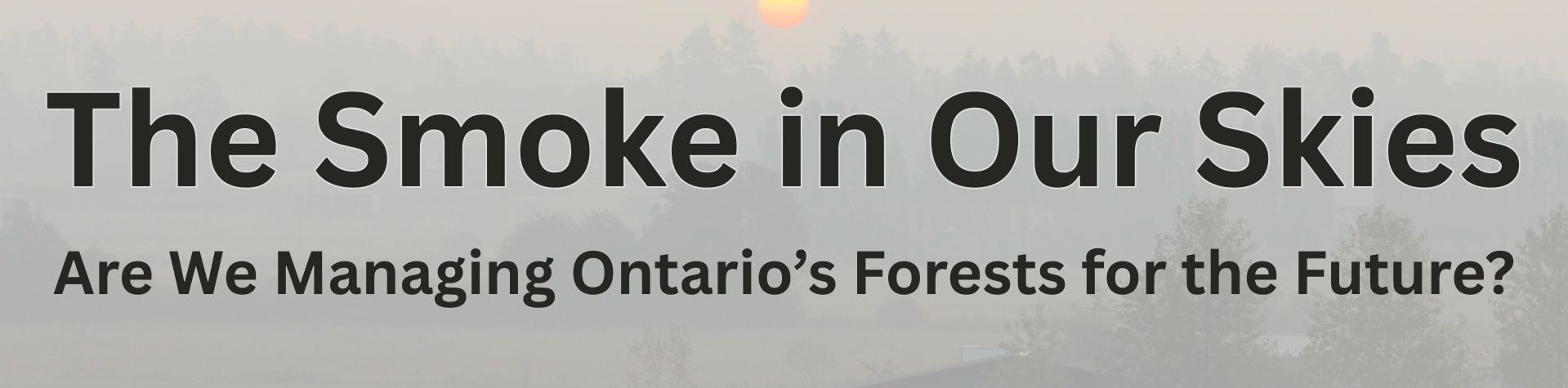
For many Ontarians, the effects of this year’s wildfire season have been impossible to ignore.
The hazy skies, smoky air, and smell of wildfire have reached communities far beyond the areas where fires are burning. It’s a reminder that decisions about how we manage our natural resources can have impacts far beyond the places where those decisions are made.
When we talk about wildfires, the conversation often focuses on emergency response: more firefighters, more aircraft, and better tools to fight fires once they begin.
Those things matter.
But responsible stewardship also means asking a bigger question:
Are we managing our forests in a way that builds resilience for the future?
Ontario’s forests are constantly changing. They’re shaped by natural processes, harvesting practices, regeneration decisions, and the choices we make about how our resources are managed.
One practice that deserves thoughtful discussion is the use of herbicides, including glyphosate-based products, to suppress competing vegetation and encourage conifer regeneration following forest harvesting.
The goal of these practices has traditionally been to support commercially valuable tree species. However, good stewardship requires us to look beyond a single objective and consider the broader impacts of changing forest composition.
Deciduous trees such as aspen and birch play an important role in forest ecosystems. Their higher moisture content and different growth characteristics can help create more diverse landscapes that may slow wildfire spread under certain conditions. Forests with a greater mix of species may offer greater resilience than large areas dominated by a single type of tree.
As wildfire seasons continue to challenge communities across Ontario, it’s worth asking whether our current approaches are creating forests that are prepared for the challenges ahead.
Forest management decisions made today can shape the landscape for decades. The balance of tree species, the structure of forests, and the way we manage regeneration all influence how those forests respond when faced with difficult conditions.
Good stewardship means being willing to examine those decisions and ask whether our current practices are creating the outcomes we want for the future.
The smoke in our skies is a reminder that environmental decisions made far away can affect communities across Ontario.
Residents deserve thoughtful discussion, transparency, and careful consideration of how we manage the natural resources we all share.
Are we managing Ontario’s forests only for today’s needs — or are we preparing them for tomorrow’s challenges?
Leave a Reply